

Standing on the Rimrocks at sunset, watching the Yellowstone River catch the last light while grain trucks rumble along I-90 below, you get why people ask if Billings, Montana, is a good place to live in the first place.
It’s not a postcard mountain town. It’s a working city of roughly 120,000 people wedged between sandstone cliffs and river bottomland, and that reality shapes everything from your commute to your heating bill.
If you’re weighing whether Billings, Montana, is a good place to live for your specific situation, the short answer is yes for most budgets and lifestyles, but the winters and housing crunch deserve a real conversation before you sign a lease or an offer.
What Daily Life Actually Feels Like Here
Ask anyone who’s lived here a decade, and they’ll tell you Billings runs on a simple rhythm: work, river trails, high school sports, and long winters broken up by surprisingly warm chinook winds.
The city’s layout, split by the Rimrocks into the Heights on one side and downtown plus the West End on the other, means your neighborhood choice dictates your daily drive more than in most cities this size.
Answering “is Billings Montana a good place to live” honestly means admitting it’s not flashy. St. Vincent Healthcare and Billings Clinic anchor two of the region’s largest employers, and MetraPark draws rodeo crowds and concerts that fill hotel rooms across town.
It’s a regional hub, not a tourist stop, and that keeps daily life grounded and practical.
Sorting Fact From Myth on Local Expenses
A lot of relocation chatter overstates how expensive Montana has gotten. The reality of the cost of living in Billings, Montana, sits noticeably below the national average, even with home prices climbing over the past few years.
Groceries, gas, and insurance all run close to or under national norms, which softens the blow of rising rent.
For the full category-by-category breakdown, including current housing, utility, and healthcare figures, check the detailed Billings cost-of-living data before you set a moving budget.
Montana’s lack of a general sales tax also stretches every paycheck further than shoppers in neighboring states might expect.
Thinking through the numbers on paper only goes so far. Talk directly with Cari Baxter about what your specific budget actually buys in today’s Billings market.
Where You Land Shapes How You Live
Billings isn’t one neighborhood; it’s several distinct pockets stitched together by the Rimrocks and the river.
- The Heights: Offers larger lots and a family-first feel but comes with a longer commute into downtown.
- The West End: Trades that commute for newer construction and proximity to Shiloh Crossing shopping.
- Downtown and South Side: Sit closer to the Yellowstone River, appealing to anyone who wants walkability or river access over subdivision quiet.
Browse the full Billings neighborhoods breakdown to match your commute tolerance and lifestyle before you start touring homes.
Family Life, Schools, and the Commute Question
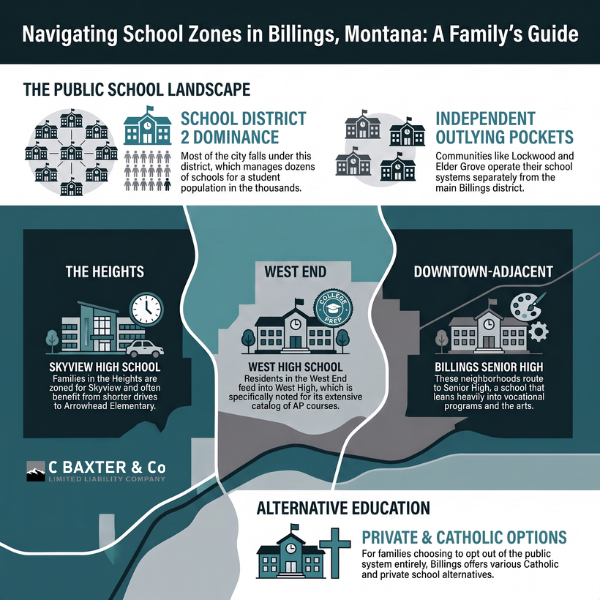
For families, whether Billings, Montana is a good place to live often comes down to one thing: school zone.
Most of the city falls under School District 2, which enrolls thousands of students across dozens of schools, but outlying pockets like Lockwood and Elder Grove run separately.
Key family considerations include:
- Heights families land in the Skyview High School zone with generally shorter drives to Arrowhead Elementary.
- West End families feed into West High School, known for a strong AP course catalog.
- Downtown-adjacent neighborhoods route to Billings Senior High, which leans into arts and vocational programs.
- Catholic and private options exist for families opting out of the public system entirely.
Before writing an offer, confirm your exact boundary using the school district’s guide, since lines can shift block by block near the city’s edges.
The Honest Downsides Nobody Puts on a Postcard
No honest answer to “is Billings Montana a good place to live” skips the drawbacks. Here’s what catches new residents off guard:
- Winter heating bills spike hard in December and January, often doubling summer utility costs.
- Housing inventory under a reasonable price ceiling moves fast, sometimes within days.
- The Heights-to-downtown commute bottlenecks during school drop-off and pickup hours.
- Air quality dips during regional wildfire smoke season, usually July through September.
- Limited public transit means owning a car isn’t optional for most households.
None of these are dealbreakers, but they’re the details glossy relocation guides tend to skip.
Billings or Bozeman: Which Fits Your Wallet
The Bozeman vs. Billings comparison comes up constantly, and the two cities feel worlds apart despite being roughly the same drive from Yellowstone.
Bozeman’s growth and tourism economy have pushed its housing market well past what most working families can comfortably manage.
Billings, by contrast, functions as a retail and industrial hub with steadier, more accessible pricing.
Comparing markets on your own is a good start, but reach out to Cari Baxter directly for a side-by-side read on what your money buys in each city right now.
Winter Reality Check
Winters here run cold but not brutal by Montana standards. Billings sits at a lower elevation than Bozeman or Missoula, which means less snowfall accumulation and more frequent chinook wind breaks that push temperatures into the 40s and 50s mid-winter.
Anyone researching what it is like to live in Billings, Montana, in January should expect icy morning commutes balanced by these warm-up stretches other Montana cities rarely get.
💡Key Takeaways
- Whether Billings, Montana is a good place to live depends heavily on which neighborhood and school zone you choose first.
- Overall expenses run below the national average, though housing has climbed steadily.
- The Heights offers space and family focus; the West End offers newer builds and shorter shopping trips.
- Winters are cold but softened by chinook winds, making them milder than Bozeman or Missoula.
- Billings beats Bozeman on affordability for most working households.
Should You Actually Make the Move?
If you value a manageable commute, a lower cost of living, and access to solid public schools without Bozeman-level home prices, living in Billings, Montana checks most boxes for working families and retirees alike.
The tradeoffs are real: cold snaps, fast-moving inventory, and a car-dependent layout.
But for most people moving to Billings, Montana, those tradeoffs are worth the steadier paycheck-to-cost ratio.
Ready to see how these numbers translate into your actual move? Connect with Cari Baxter for a neighborhood-by-neighborhood game plan built around your budget and school priorities.

Frequently Asked Questions
Is Billings, Montana a good place to live for families?
Yes, especially in the Heights or West End, where school assignments, park access, and larger lots support family routines. Confirm your school zone boundary before buying, since district lines shift block by block near city edges.
What are the downsides of living in Billings, Montana?
Winter heating spikes, fast-moving housing inventory, and a Heights-to-downtown commute bottleneck top the list. Summer wildfire smoke (which you can easily track via EPA’s AirNow) and limited public transit also affect daily life for new residents.
Is Billings cheaper to live in than Bozeman?
Yes, significantly. Bozeman’s tourism-driven growth has pushed home prices and rents well above Billings, making Billings the more accessible option for working families and retirees on fixed budgets.
How bad are Billings winters compared to the rest of Montana?
Milder than Bozeman or Missoula. Billings sits at a lower elevation, so snowfall totals are lighter, and frequent chinook winds push temperatures into the 40s and 50s even mid-winter.
